The 2026 FIFA World Cup in North and Central America.
Determined to watch Japan play live, I decided to purchase tickets through FIFA's official resale site before the draw even took place.
After actually buying,
there were far more things I wished I had known beforehand than I expected.
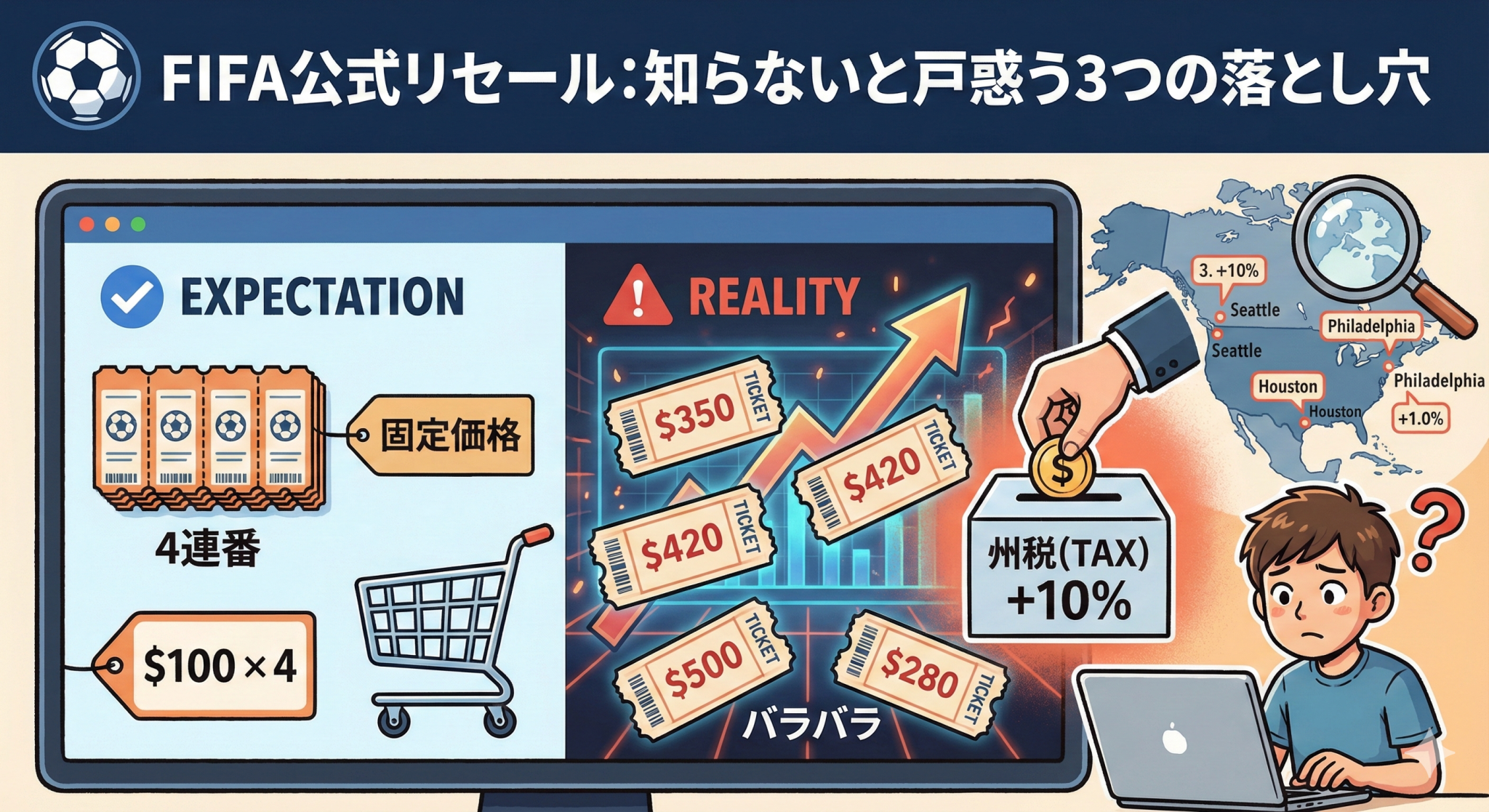
In this article,including my own lessons learned, here are 3 key points I wish I had known before trying the resale market. are compiled here.
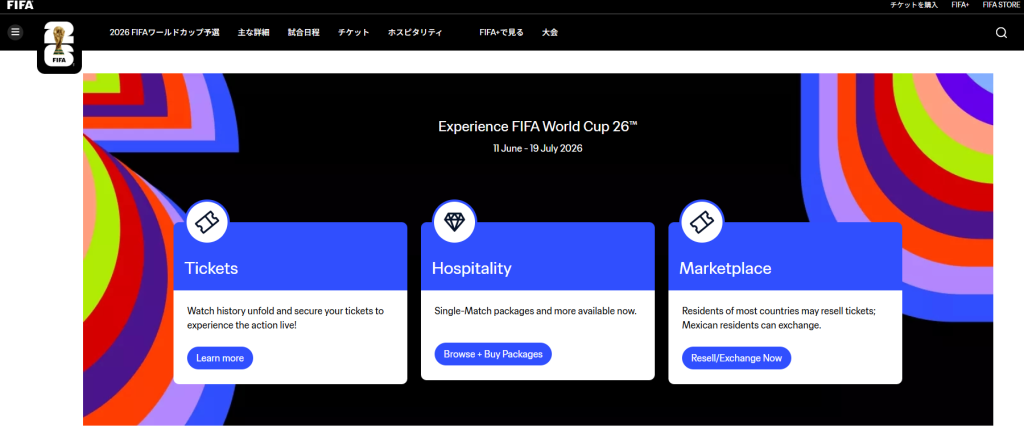
1. Sellers can set any price they want
In past World Cups, resale was basically done at face value, but
this time the rules have changed, andsellers can freely set their own prices.That's how it works now.
(Link to the FIFA resale page is here)
As a result:
- Popular matchups see prices surge to several times face value.
- Conversely, oversupplied matches stagnate near face value.
- Prices vary significantly by host city and seat category, with wide price gaps.
It felt very much like a live market.
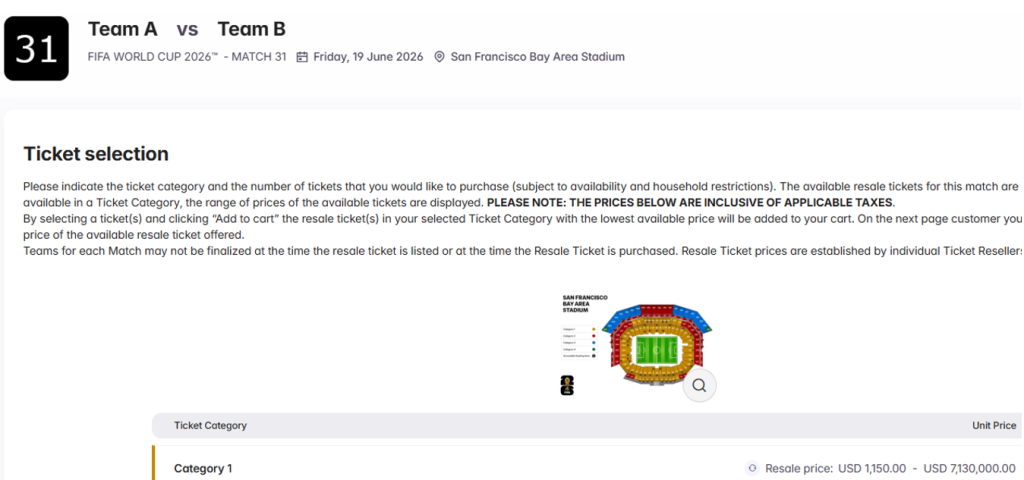
Below is Match 31 in San Francisco. The minimum price around $1,000 is expected, but the highest ask is $7.13 million...(approximately 1.1 billion yen)...so basically, anything goes with the pricing.
2. [Most Important] Buying 4 tickets does NOT guarantee 4 consecutive seats
Wanting to watch side by side with family and friends,
I thought selecting Quantity 4 would get adjacent seats —
but that is not how it works.
Why?
To meet the requested quantity, the resale platform
collects tickets from multiple sellers, starting from the cheapest available.
That's how it operates.
As a result:
- 4 tickets at different unit prices
- → From different sellers
- → In different seats (not consecutive)
— that's the situation you end up in.
Conclusion:
4 tickets does NOT equal 4 consecutive seats.
If you need consecutive seats, be prepared before purchasing.
3. The hidden cost of state sales tax
If you budget only for the ticket price plus fees (15%), you're in danger.
Since this is held in the United States,state sales tax is added on top.are distributed.
It varies significantly by city:
- Houston (0%) No additional charge
- Philadelphia (approx. 5%)
- Seattle (approx. 10%) Tax alone adds tens of thousands of yen
In particular,
Expensive tickets combined with a 10% tax rate
hits the wallet harder than you'd imagine.
Lesson:
Always check the city's tax rate before purchasing to be safe.
Summary: Chapter 1 Recap
- Prices fluctuate like a market
- 4 tickets does not mean 4 consecutive seats
- State tax can significantly change the final price
These 3 points are things I wish I had known beforehand —
they would have changed how I approached my purchase.
overpriced, In the next post (Chapter 2), I'll organize ticket pricing trends with real examples.

Comments