
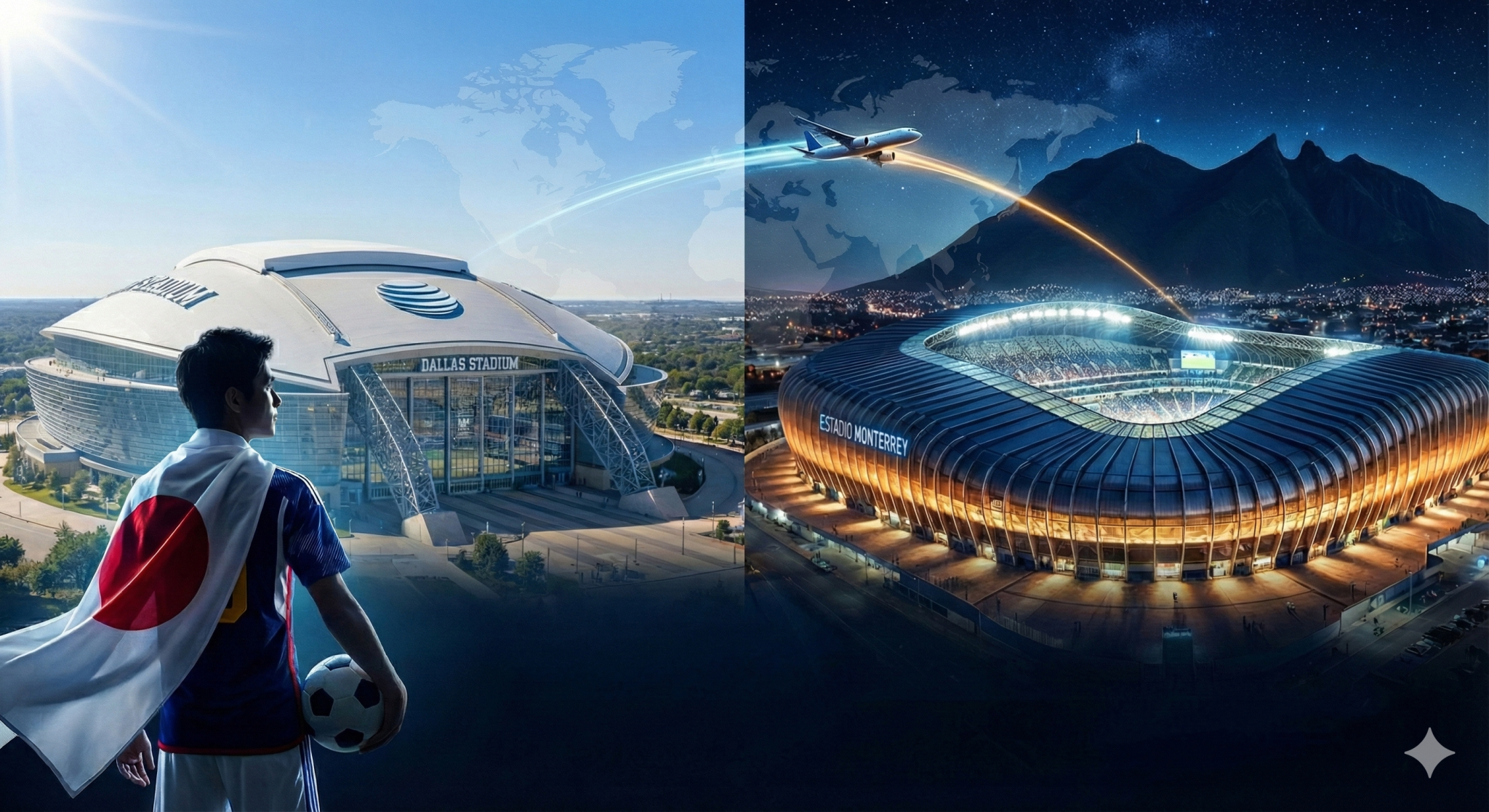
This morning (Dec 7, 2:00 AM), most of the FIFA World Cup 2026 match schedule was officially announced (I've compiled it in Excel below for easy reference).
As I mentioned before, when considering advancement paths through the Round of 32 and beyond, Japan's Group F is generally a 'favorable draw' (especially looking at the knockout rounds).
Japan can likely avoid top-seeded opponents until the quarterfinals, and geography isn't a major issue.
On the venue front, Japan can use Dallas as their base through the quarterfinals. The Netherlands play in Dallas, Houston, and Kansas City with no border crossings, so their travel is easier.
Japan's Match Schedule (Japan Time)
Matchday 1 vs. Netherlands
June 15 (Mon) 5:00 AM
Venue: Dallas (AT&T Stadium)
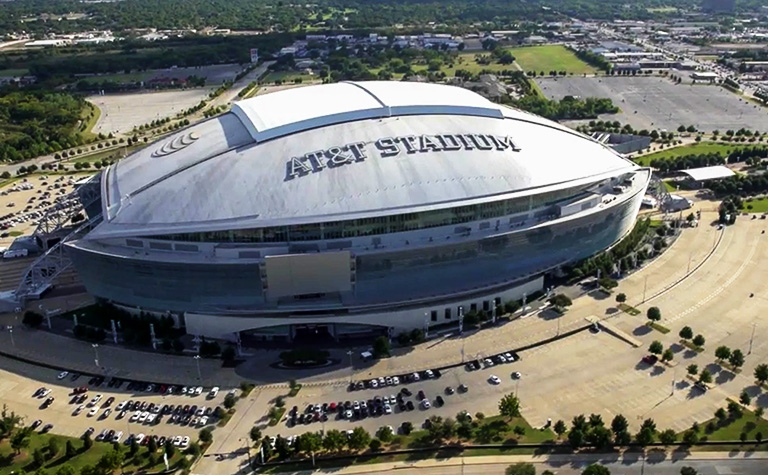
This is the largest of all 16 stadiums being used!! (94,000 capacity)
Matchday 2 vs. Tunisia (This will be FIFA's 1,000th all-time match — a commemorative game!)
June 21 (Sun) 1:00 PM
Venue: Monterrey (Estadio BBVA)
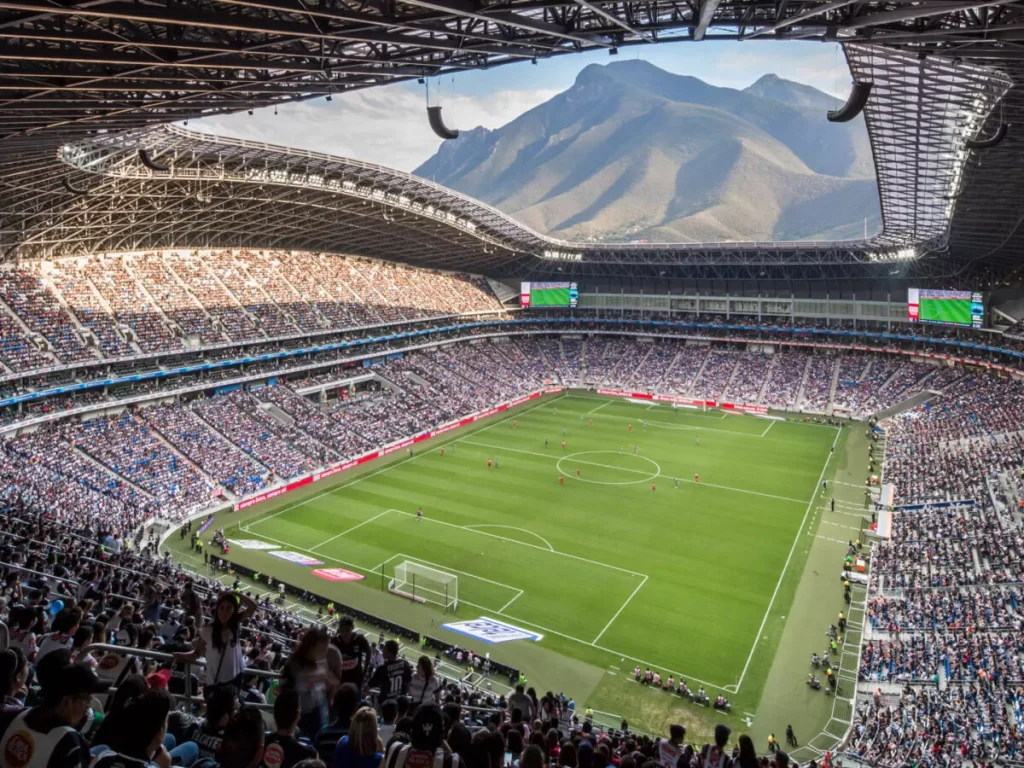
Nicknamed 'The Steel Giant,' this stadium has a capacity of 53,500. It was built just 10 years ago, making it a very modern venue.
Matchday 3 vs. European Playoff Winner
June 26 (Fri) 8:00 AM
Venue: Dallas (AT&T Stadium)
Travel Burden: Dallas to Monterrey Is Like a 'Tokyo-Fukuoka Round Trip'
Japan's main travel route, Dallas to Monterrey, is about 1,400 km. .
To put it simply,a Tokyo-Fukuoka round tripis a comparable distance.
Compared to other groups, the travel burden is 'moderate.'
- Short example 1:Paraguay: Los Angeles to San Francisco (similar to a one-way Tokyo-Osaka trip)
- Short example 2:Egypt: Seattle to Vancouver (similar to a Tokyo-Hamamatsu round trip)
- Long example:Algeria: Kansas City to San Francisco (similar to Sapporo-Okinawa, or Japan-Taiwan)
The travel distance alone isn't especially favorable, but it's not so demanding as to hinder match preparation.
Matchday 2 in Monterrey: Not the 'Scorching Heat' We Expected, but a Surprise '10 PM Local Kickoff'
The initial concern was:
"Monterrey is the hottest of all 16 venues in the tournament."
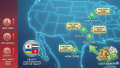
That was the issue. (Below is a heat map showing average temperatures.)
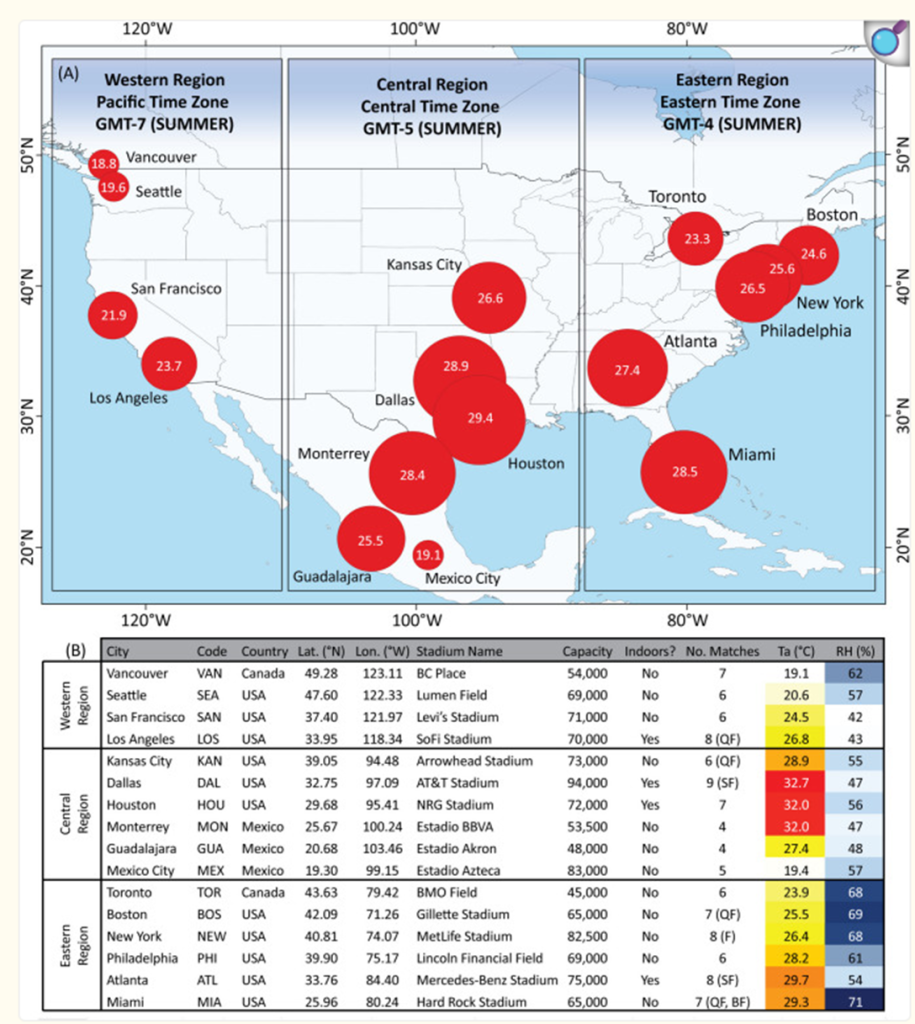
However, there was a pleasant surprise.
1 PM Japan time = 10 PM local time the previous day!
Mexico has abolished daylight saving time (DST), so the time difference with Japan is -15 hours..
Therefore,
Japan: June 21 (Sun) 1:00 PM
= Mexico: June 20 (Sat) 10:00 PM
So we now know that the feared daytime scorching kickoff has been avoided.
This is a significantly positive factor.
This is the 'only' and 'latest kickoff' of the entire tournament.
Looking at the overall schedule, out of 104 matches,the 10 PM kickoff is exclusive to this Japan match,making it the latest kickoff time in the entire tournament.
A 10 PM kickoff might remind some of you of the 2014 Brazil World Cup match against Ivory Coast (in Recife). Many of you probably remember that game.
I watched that match in person. Japan suffered a dramatic comeback loss after Drogba came on. Walking to the bus stop in heavy rain, I didn't get back to the hotel until 2 AM... Painful memory. Hoping for redemption this time!!
Risks Unique to a 'Late-Night Match' (From a Spectator's Perspective)
While the worst-case heat scenario has been avoided, late-night matches come with their own challenges.
1. You'll need to secure transportation home after the match
The match will end around midnight to 12:15 AM. Simple overall odds: approximately 1 in 80 to 100
Monterrey's public transportation essentially stops running late at night, soyou'll likely need to rely on Uber or DiDi.I expect they'll have shuttle buses running through the city center like they did when I attended in Brazil, but right after the event, surge pricing is likely.
2. Late-night safety concerns
Monterrey is considered relatively safe, but conditions change late at night.
You'll need to carefully plan your hotel location and return route in advance.
3. Daytime sightseeing is actually easier
With a 10 PM start, there's plenty of time for daytime sightseeing and travel.
Overall, the impression is that'late-night safety' rather than 'heat countermeasures' will be the key concern.is the takeaway.
That's the breaking news update for now. I'll share more when there are further developments!
Reference Data: Climate and Health Risks at Venue Cities
Here's a scientific paper that organizes the climate risks for the 2026 World Cup:
https://pmc.ncbi.nlm.nih.gov/articles/PMC11947059/
It's a useful resource for considering spectator safety.
📌 World Cup 2026 Japan National Team Watching Guide
- overpriced, Itinerary Plan 1: Comparison of two airline routes
- overpriced, Monterrey 10 p.m. kickoff strategy
- overpriced, AT&T Stadium's Best Seats Explained
- overpriced, Click here for a summary of ticket information.
Comments